
Teaching integer operations is one of my favorite topics. Really getting students to develop a conceptual understanding of integer addition and subtraction is key for many of the future topics they will learn. That is why I do not tell students to memorize integer operation rules. Instead I want them to experience working with integers and realize the rules as they go.
I spend about a week working on adding and subtracting integers with 7th graders so they have time to think about real world situations, work with manipulatives, and really understand what they are doing. Here are the activities and resources I use to get students thinking!
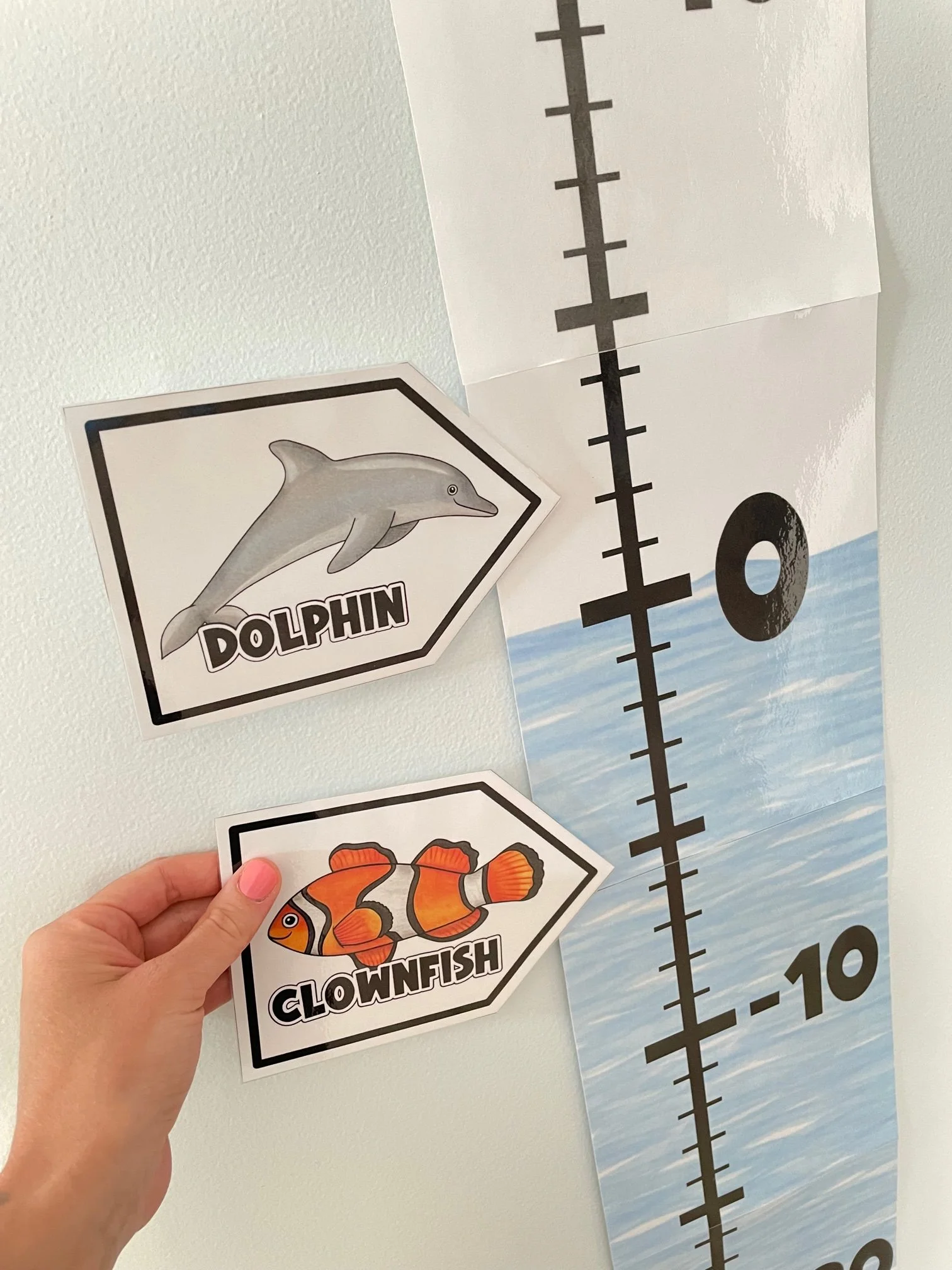
I love to start with the real world context of sea level. Before we begin any operations, we spend a day or two problem solving with sea level, thinking about positives and negatives, and exploring distance on a vertical number line. This experience gives us something real to reference as we start operating.
I love creating a large sea level number line on the wall and using the prompts from this sea level lesson.
We begin talking about absolute value as the distance from 0. Students compare different sea creatures’ distance from sea level.
Students also start finding the distances between sea creatures and moving the sea creatures using the vertical number line. They may not realize it yet, but they are operating with integers. The real world example helps them make sense of their answers. Then we start connecting the real world context to the mathematical expressions. For example: A clownfish starts at 5 meters below sea level and descends 10 meters. We discuss the new elevation and write the equation -5 - 10 = -15, all while referencing the number line.
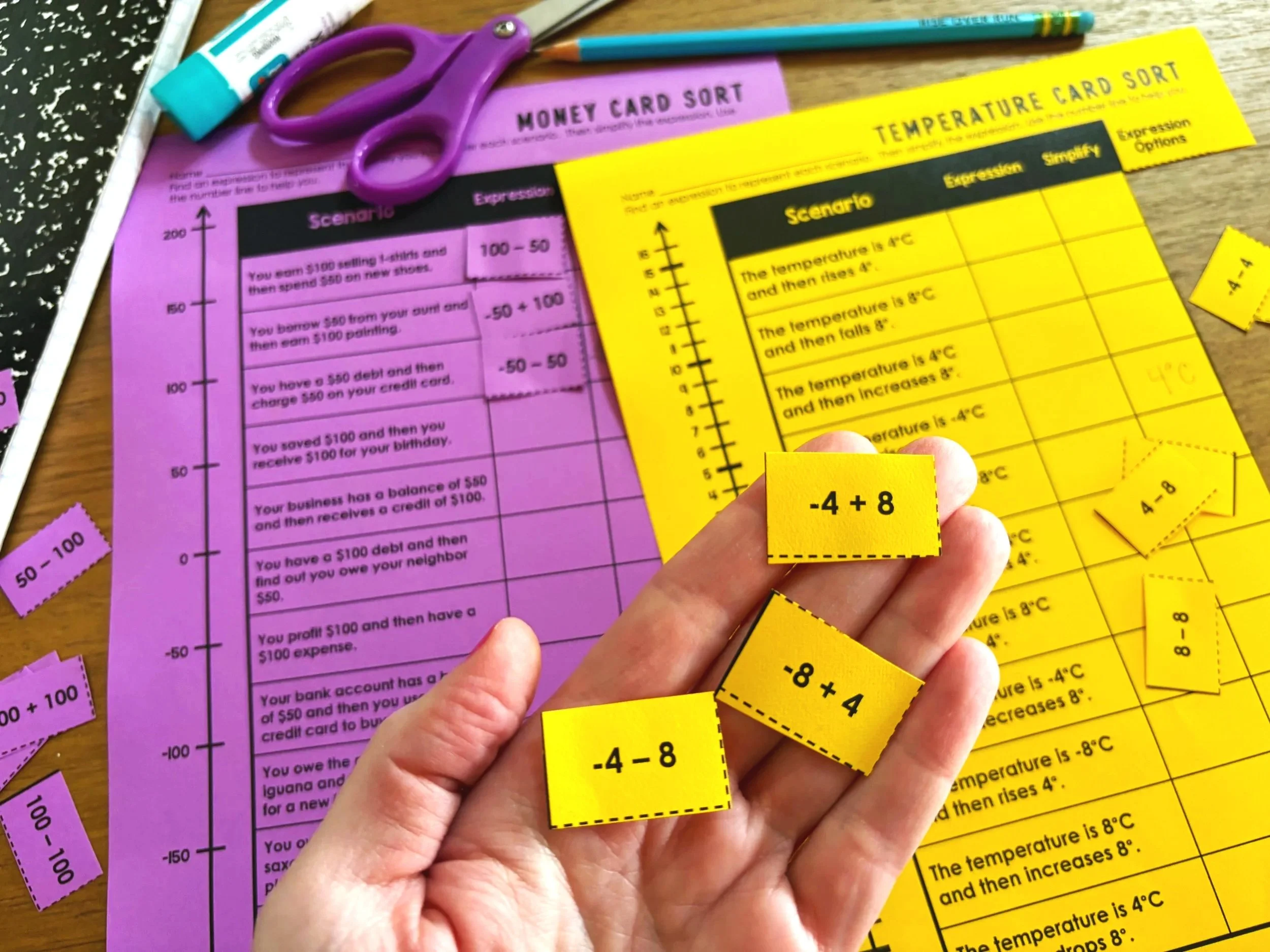
Next students work through a couple card sorts that help them connect real world scenarios, a vertical number line, and integers. These card sorts relate to temperature and money. Students match addition and subtraction expressions to each sentence and then evaluate them. These are great for partners to discuss or for individual practice.
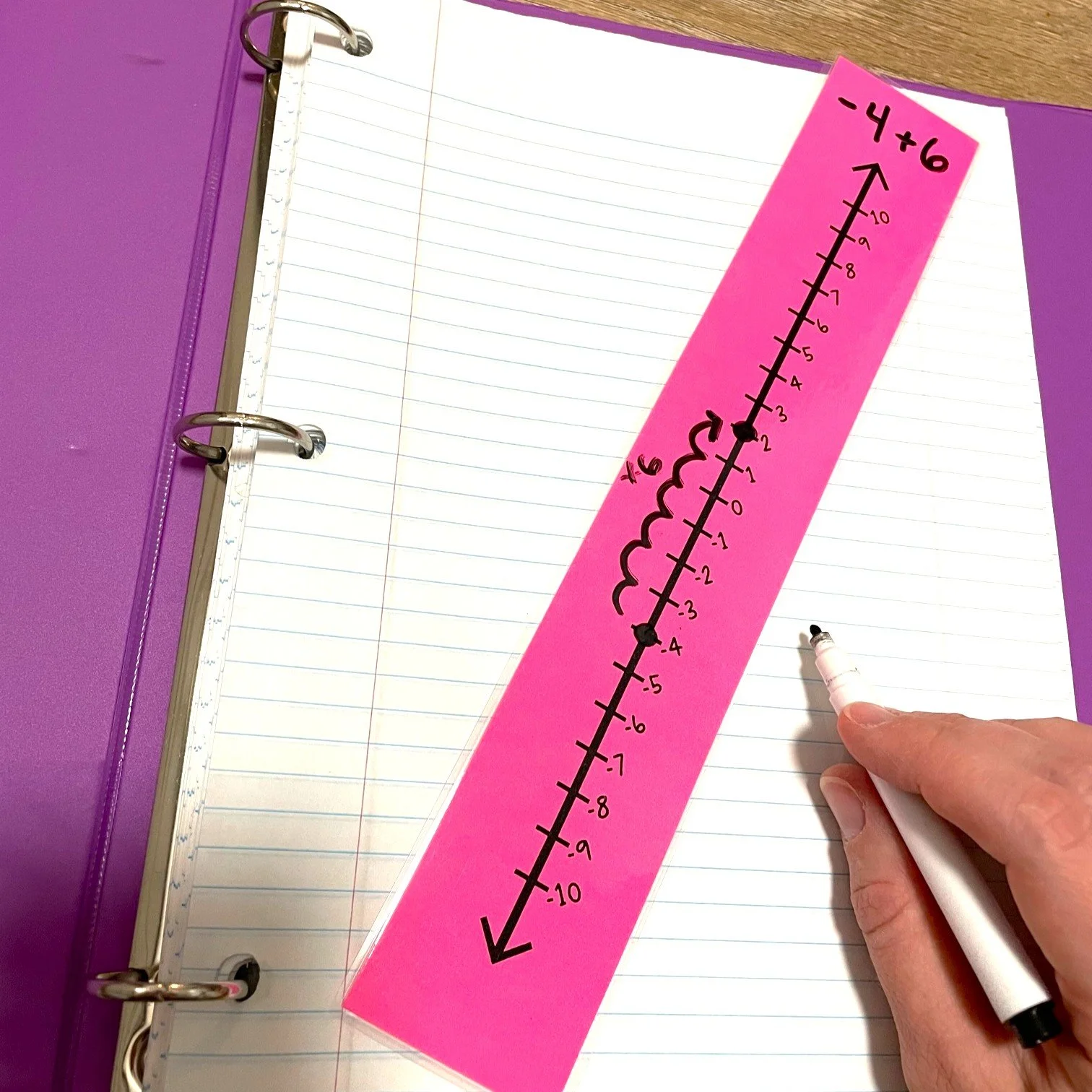
I give all my students these number lines -10 to 10 to keep in their binders. The number lines are laminated so they can write on them with dry erase markers. They can be turned vertical or horizontal.
We start adding and subtracting integers without context with these. I instruct my students to locate the starting value, think about if they should move up or down, and then how far. For example, with -4 + 6, students will locate the starting value of -4 and then move up 6 spaces, landing on 2.
I allow students to continue using these numbers line any time they need to throughout the unit. I also hang a large number line on the wall for them to reference.
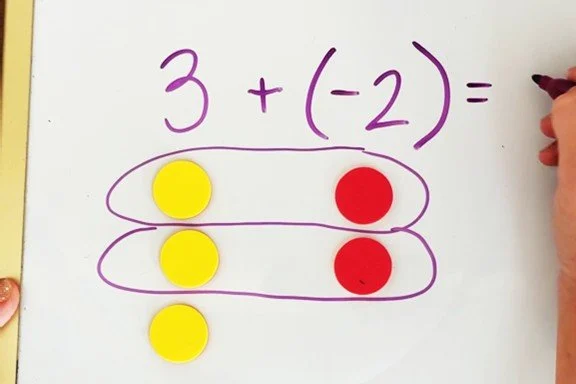
Next we spend a day using integer chips. If you’ve never used integer chips, they are a powerful way to represent integers in situations like positive and negative charges in atoms or deposits and charges to a bank account.
Students get several integer chips (or counters). Each yellow chip represents 1, and each red chip represents -1.
When using integer chips, students need to understand the concept of a zero pair, which is made of a positive and negative chip. I created this PowerPower of problems to guide students in using integer chips. It takes them from a basic understanding to adding and subtracting integers.
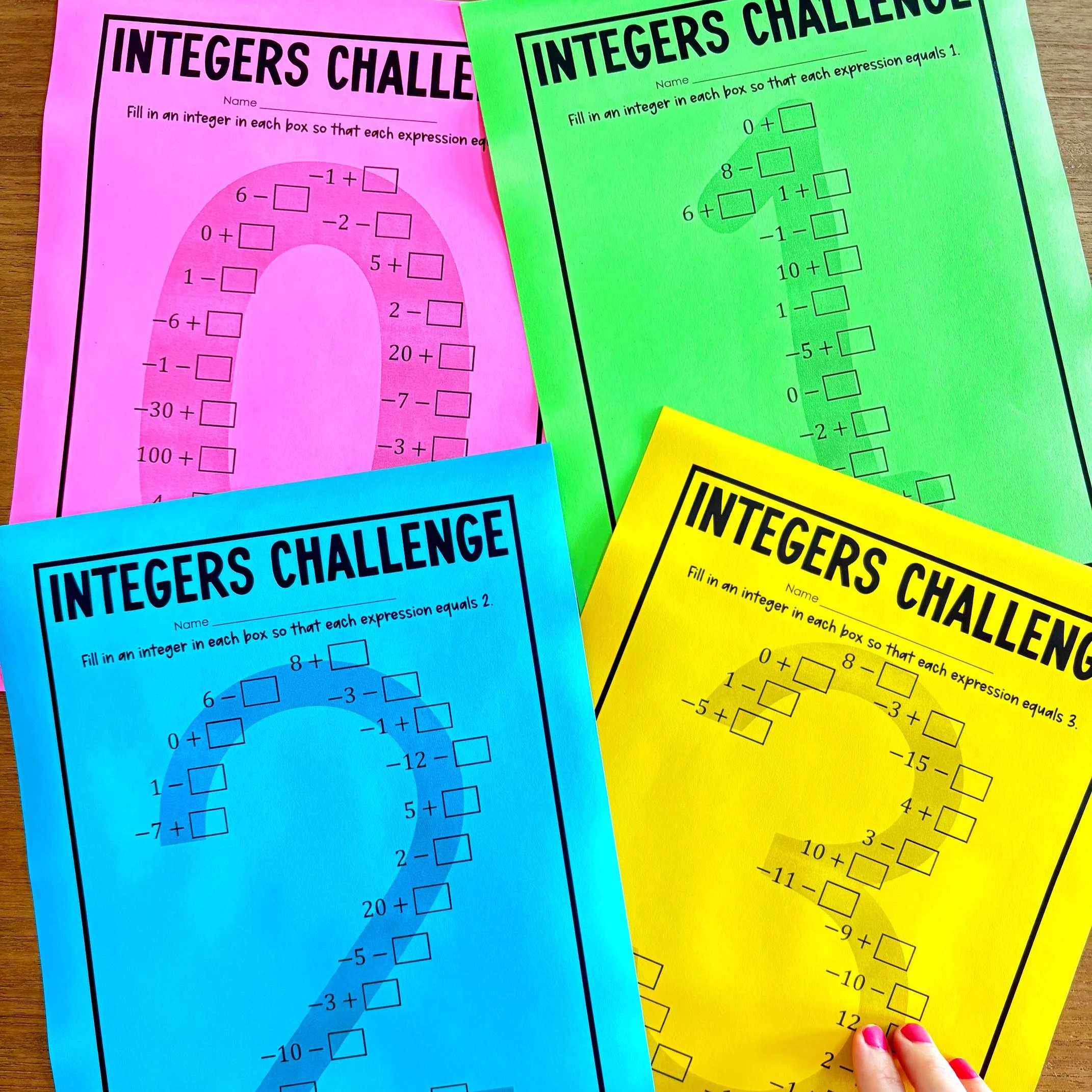
For practice with a little twist, I use these integer challenge worksheets. Students are given the solution and they must complete each problem. For example, with the 0 page, they write an integer so that every problem equals 0. This requires them to think in reverse! It’s a little more difficult than just solving and helps deepen their understanding.
Throughout the week, we also play games with these integer game cards for extra practice.
All of these activities have helped my students think deeply about integer addition and subtraction. I never require them to memorize the rules. Sometimes a student will come to class with the integer rules given to them by someone else before they’ve had a chance to really work through the thinking. I have found when this happens, the student often relies on those rules to get answers and then gets confused later on when we start multiplying and dividing. It’s just too many rules to memorize without a solid foundation of understanding.
Instead of focusing on learning rules, I try to have my students realize what patterns they see and make generalizations. I’ll ask them questions like, “If you add two negative numbers, what can you tell me about the sum?” “If I add numbers with different signs, will the solution always, sometimes, or never be positive?” These types of questions are great discussion-starters. Getting students to prove their answers helps them think like mathematicians!